About PennSTART
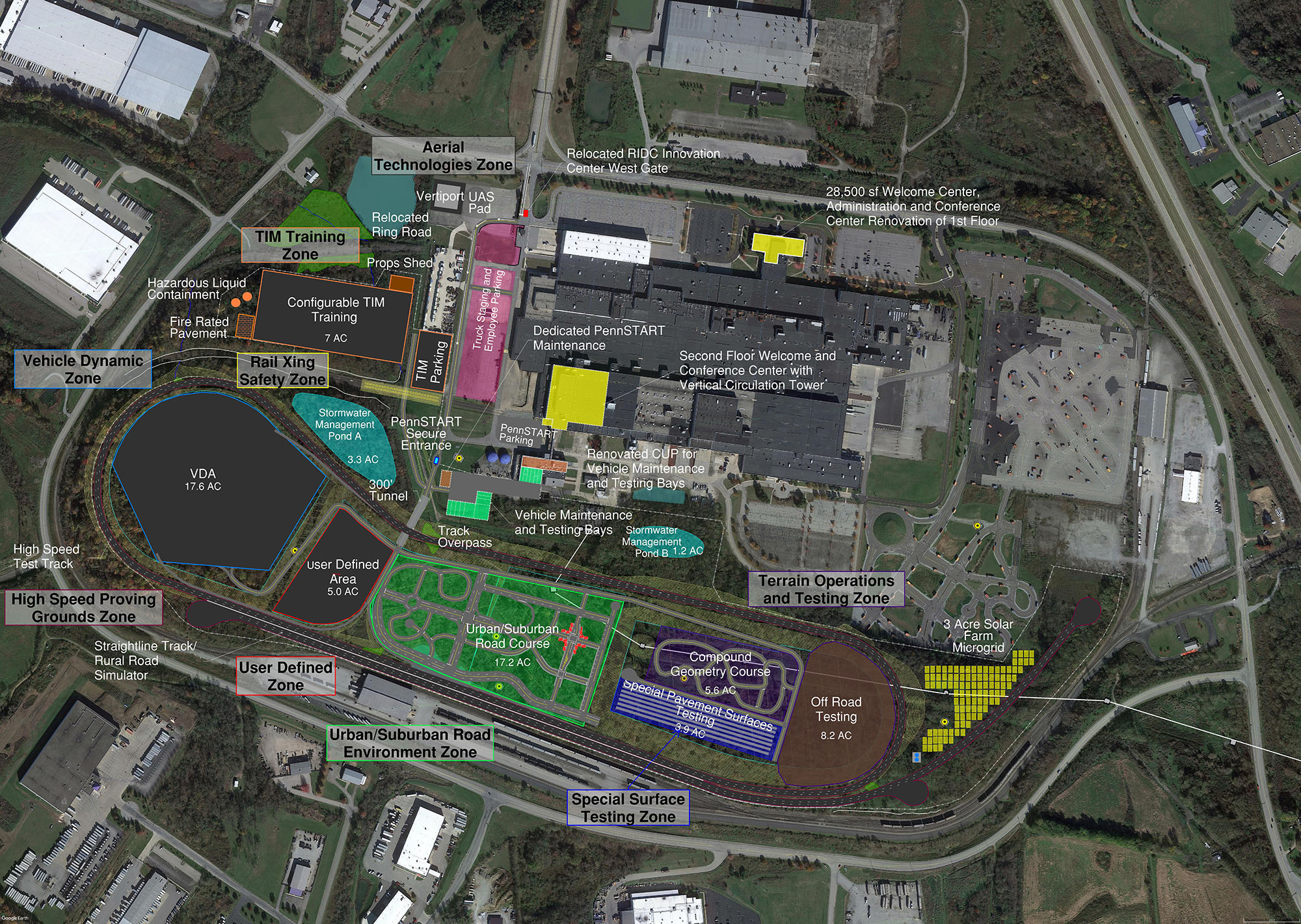
Early concept plan
PennSTART is set to become the premier state-of-the-art facility for transportation safety and operational research in Pennsylvania and the Mid-Atlantic region.
Our vision embraces the development of a leading hub for innovation, where collaboration and cutting-edge technology thrive to boost transportation safety and efficiency.
Goals of PennSTART
Improve safety and efficiency of transportation systems
Bring together public, academic, and private partners to advance transportation safety through research, training, testing, and deployment.
Enhance training
Train first responders to advance the National Unified Goal (NUG) for Traffic Incident Management, while supporting workforce development in emerging transportation technologies.
Support economic development
Drive regional development by attracting advanced industries for research, testing, and training.

Focus Areas of Innovation
PennSTART is tailored to spur advancements in various crucial transportation sectors.
Traffic Incident & Work Zone Safety
Intelligent Transportation Systems (ITS) and Tolling
Automated & Connected Vehicles
Commercial and Transit Vehicles
Crossing Safety (Rail, Bicycle, Pedestrian)
Aviation and Unmanned Aircraft Vehicles (UAVs)
Advancing innovation
History of PennSTART
PennSTART’s roots trace back to 2014 when the Pennsylvania Transportation Advisory Committee recognized the need for enhanced Traffic Incident Management (TIM). This realization sparked the inception and development of PennSTART, inspired by a series of recommendations aimed at advancing TIM training specifications and infrastructure.
In 2016, bolstered by support from the Federal Highway Administration (FHWA), PennSTART began taking shape. The facility’s vision expanded following a feasibility study, revealing market demand for a venue that could cater not only to TIM training but also to emerging transportation technologies and research needs.
A Legacy of Transformation:
From Manufacturing to Innovation
History of RIDC Westmoreland
RIDC Westmoreland stands as a testament to resilience and adaptive progress. Once home to major industrial operations, its evolution underscores the region’s ability to pivot toward a future defined by technological advancements and collaborative innovation.
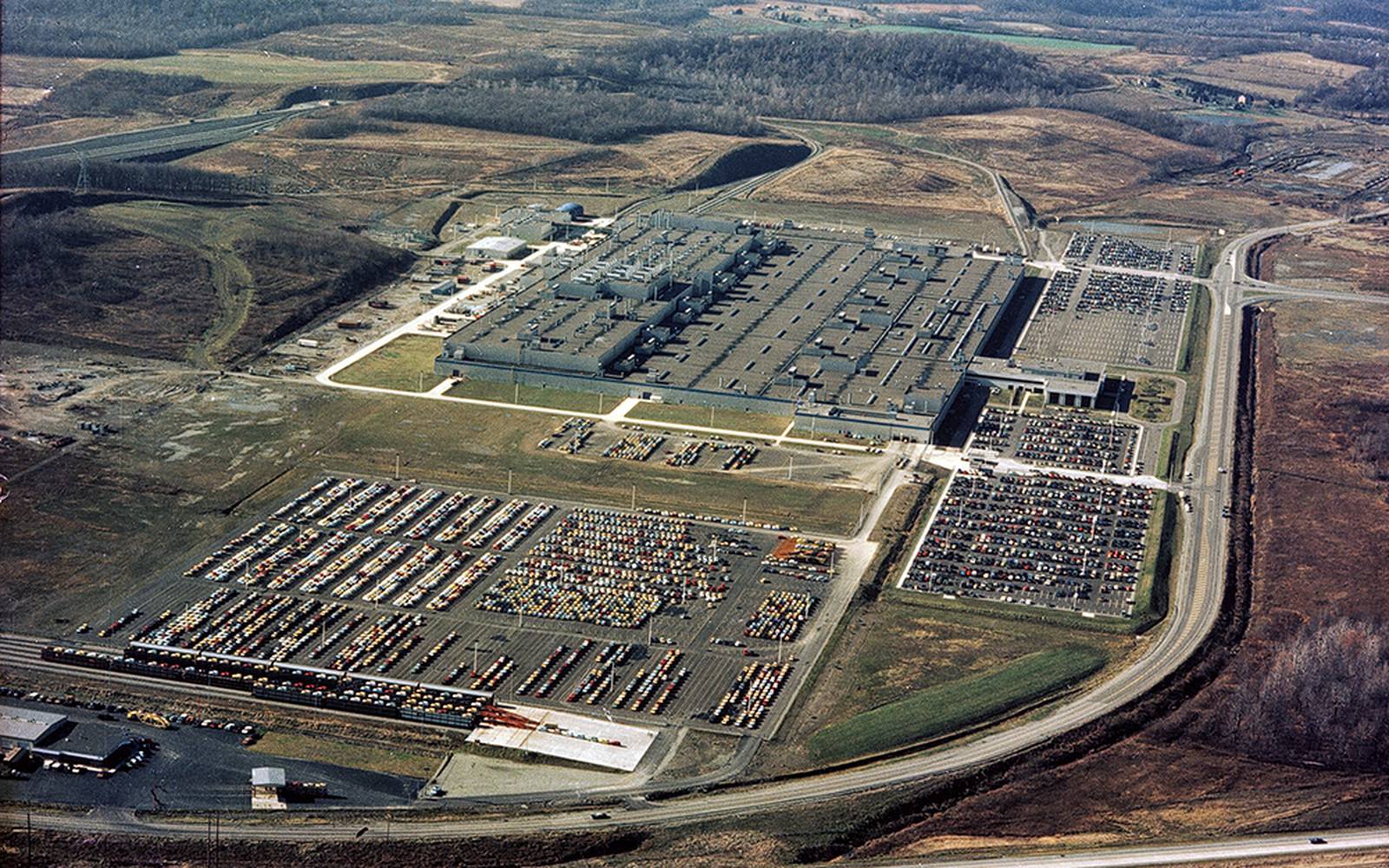
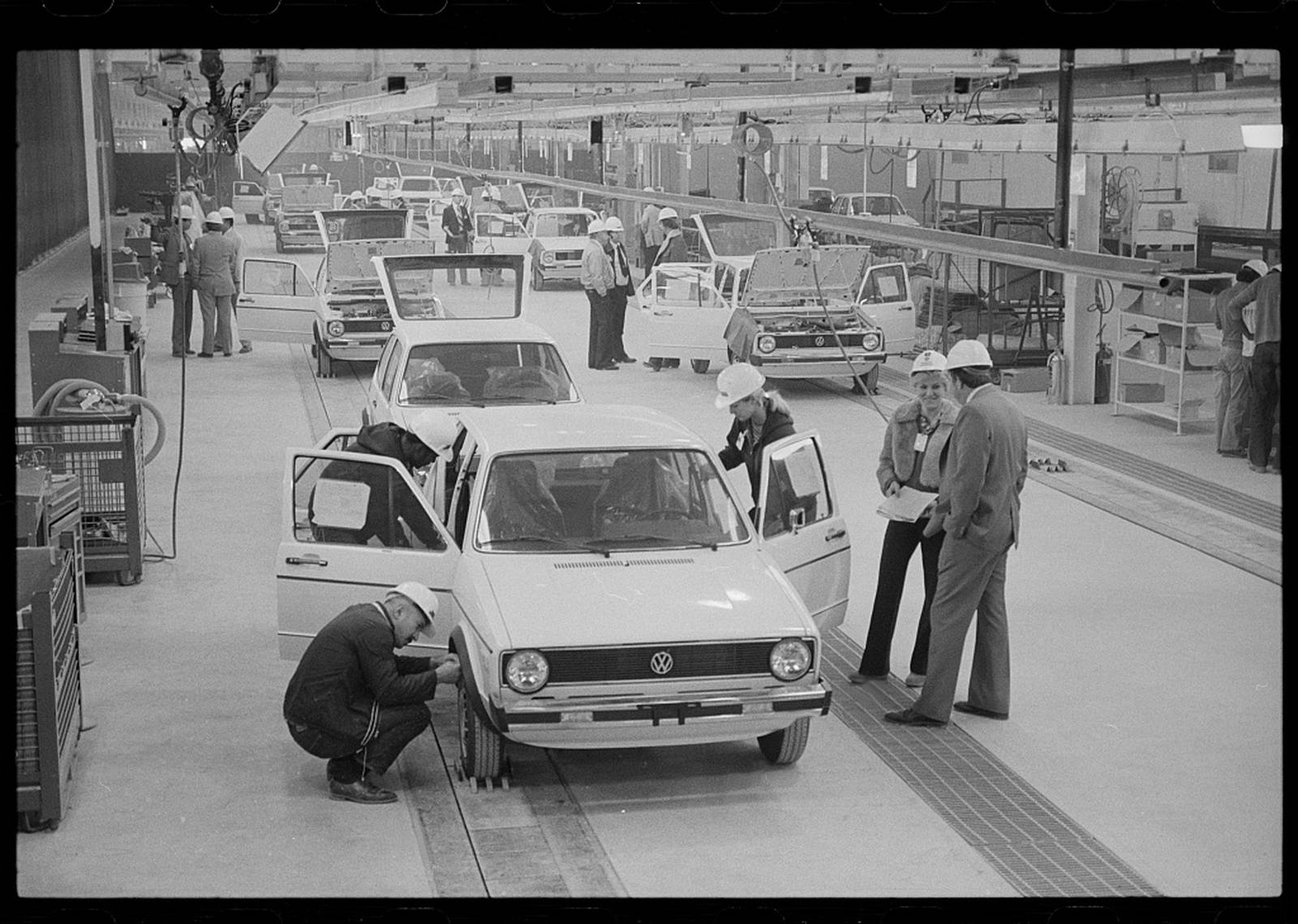
Early Beginnings: Volkswagen and Sony
Established as part of southwestern Pennsylvania’s manufacturing boom, the facility first served as a production plant for Volkswagen in the late 20th century. Its assembly lines symbolized global connectivity, contributing to the automotive industry’s regional prominence. Transitioning ownership in the 1990s, the site became a cornerstone for Sony, supporting a major electronics manufacturing hub specializing in televisions and other consumer technologies. For decades, the facility provided thousands of jobs while reflecting the manufacturing dominance of its era.
Transforming Into a Hub of Innovation
Following the closure of the Sony plant in 2008, the Regional Industrial Development Corporation (RIDC) of Southwestern Pennsylvania envisioned a new purpose for the expansive 2.8 million-square-foot campus. With a focus on revitalization, RIDC Westmoreland was reimagined as a center for technology-driven industry and collaborative growth. Today, it serves as a hub that supports diverse tenants, including advanced manufacturing, energy solutions, and transportation innovation. Housing leaders such as Siemens Energy and Intervala, alongside institutions like the Advanced Technology Center at Westmoreland Community College Carnegie Mellon University, the facility is redefining what it means to foster sustainable economic growth.
Supporting the Future of Transportation Technology
The decision to host PennSTART within RIDC Westmoreland further solidifies its reputation as a forward-looking center for ingenuity. Once a site of single-user manufacturing operations, it is now positioned at the forefront of cutting-edge research, interdisciplinary collaboration, and workforce development. By combining its legacy of industrial excellence with its modern innovations, RIDC Westmoreland plays a pivotal role in redefining how transportation systems are tested, trained, and implemented across Pennsylvania, aligning with PennSTART’s mission to enhance safety, efficiency, and public mobility.
Partners
Training, Testing & Research
PennSTART marks a collaborative venture between the Pennsylvania Department of Transportation (PennDOT), the Pennsylvania Turnpike Commission, Regional Industrial Development Corporation (RIDC) of Southwestern PA, Carnegie Mellon University, and Westmoreland County. This state-of-the-art facility is set to empower emergency responders, transportation technology companies, and research institutions, fueling economic growth and innovation.